Patient Support Team: 0800 083 3060 - Mon-Fri: 8am - 6pm, Sat: 8am - 5pm

George Ngu is a homecare medicines nurse who has worked for HealthNet for the past two years. He previously worked as an NHS nurse in accident and emergency and on the dialysis ward. He explains why homecare nursing requires such a high level of expertise and the difference it makes to his patients’ lives.
Working as a homecare nurse you have to be an expert and be at the top of your game at all times. When you are treating a patient in their own home there is no doctor for you to call over for advice. As that patient’s dedicated nurse, you need to understand what the medication is, how it works, what it does and all of the side effects. You need to be clear on why the patient was prescribed that medication, whether it will interact with any food or other medication they are taking and when the best time for them to take their medication is. It is essential to be confident and incredibly diligent to observe any changes in the way a patient is presenting so you can react quickly. Because it is one to one care you have to be more aware but you have the time to do that because it is not like being on a hospital ward where you are stretched between six or seven patients.
The day before I visit a patient I will get my allocation from scheduling and that is when I start my range of checks - is it the right patient, have they been prescribed the right medication, is there anything in the previous notes about any risks, is there anything else I need to be aware of before I see the patient?
When you are treating a patient at home you need to be aware of all the small things - how do they seem? How fast is the patient talking? For example, I visited a patient today who was very alert and friendly when I arrived but when I started the infusion she started forgetting words and seemed a bit flustered. I asked her how she was feeling and while she hadn’t noticed anything she was pleased I had. I was able to pause the infusion and do her vitals again to make sure she was okay. After she’d had a break and I had checked everything, we were able to start the treatment again and finish it safely. It is all these subtle changes that we are hyper-vigilant about as homecare nurses. We are working in a highly-clinical environment and we need to be aware of how the patient is reacting for every second that we are with them.
I had another patient who was receiving treatment and his eyes started watering, his face started to swell and he started struggling to breath. I stopped the infusion immediately as I was aware he may be going into anaphylactic shock. It was an unusual case because I checked down his throat and it wasn’t swollen and his vitals showed he had a raised heart rate and raised blood pressure, so while we carry adrenaline in our medical bags, I knew that on this occasion it was not the right thing to give him. I called an ambulance immediately and when they arrived ten minutes later the patient’s condition was starting to improve. These quick actions prevented his condition worsening and meant he didn’t need to go to hospital. As a homecare nurse, in situations like this you have to act quickly but remain calm because the patient is counting on you.
There have been other occasions where my actions as a homecare nurse has prevented hospital admissions. We see this a lot with my younger Crohn's Disease patients. They may have gone out with friends and eaten something they shouldn’t have and when I arrive they may be having a flare up. On these occasions I am able to contact their IBD team and explain the situation and ask if they want me to administer the biologicals they are due to have that day. The team usually gives approval for me to go ahead and administer the medication but ask me to instruct the patient to attend hospital if their flare up does not improve. Usually when I next visit the patient I will discover that the patient’s condition improved after treatment, preventing a hospital admission.
Homecare can also be instrumental in preventing hospital admissions for patients who are immuno-suppressed and need immunoglobulin treatment. Often before they start treatment through homecare, they will have been to hospital up to 40 times a year and admitted to a side ward to be treated with antibiotics. It is a vicious circle because every time they go into hospital they are more likely to pick up another infection while they are there because of their condition. But when they start their treatment at home with us, we will see the number of hospital admissions fall to once or twice a year.
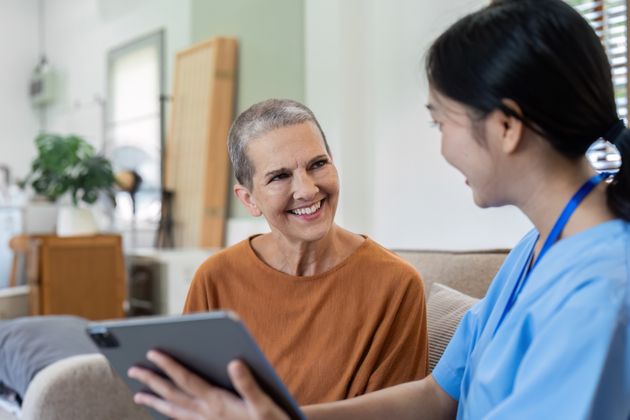
There are also other patient benefits that come with receiving treatment at home. With homecare nursing, that patient is the centre of care. They are often calmer because they are in their own environment and they are more likely to be more open with you than they would be in a hospital setting. They are not as nervous and are usually more relaxed - we often find this when we do their blood pressure readings. They are not in a stressful environment, they are in a setting where they feel more comfortable. As homecare professionals we have to be careful not to undermine that trust and be mindful about not doing anything that makes the patient nervous. We have to be incredibly aware of everything we do. But if we all do our job properly then the benefits for patients are immeasurable.
Patients want to be involved in their care and have a voice and homecare gives them that opportunity. It also saves them time and prevents them having to take time off work to go to hospital. I have one patient that works through her emails when she is having her infusion done. The continuity that a patient receives through homecare keeps the trust alive. If the patient trusts you they will tell you things that they might not necessarily tell a GP because they feel comfortable with you. You also pick up on all the little changes going on with their health and condition that the patient might not have even noticed themselves. That is because you know them so you can pick up any subtle changes in behaviour and act accordingly.
High-tech homecare has the opportunity to play a small part in the goal to move care closer to people’s homes under the Government’s future plans for health care. We can also save the NHS money. If you take an immuno-suppressed patient for example that is being admitted to hospital 40 times a year, that is costing hundreds of thousands of pounds each year for that one patient. It is far better to invest that money into homecare for that patient so they can be treated by their own nurse at home and reduce the number of costly-hospital admissions.
)
George Ngu
Homecare Medicines NurseRelated Articles
View all News Articles InsightsSeptember 4th, 2026
The Clinician's Gateway Roadshow: Shaping the Future of Digital Homecare Together
Read Article InsightsSeptember 2nd, 2026
World Pharmacists Day: Celebrating the Expertise Behind Safe Homecare
Read Article InsightsAugust 13th, 2026
Advancing Homecare Through the Electronic Prescription Service (EPS)
Read Article